The Best Mods to Enhance Skyrim in 2026: From SMIM to Wabbajack
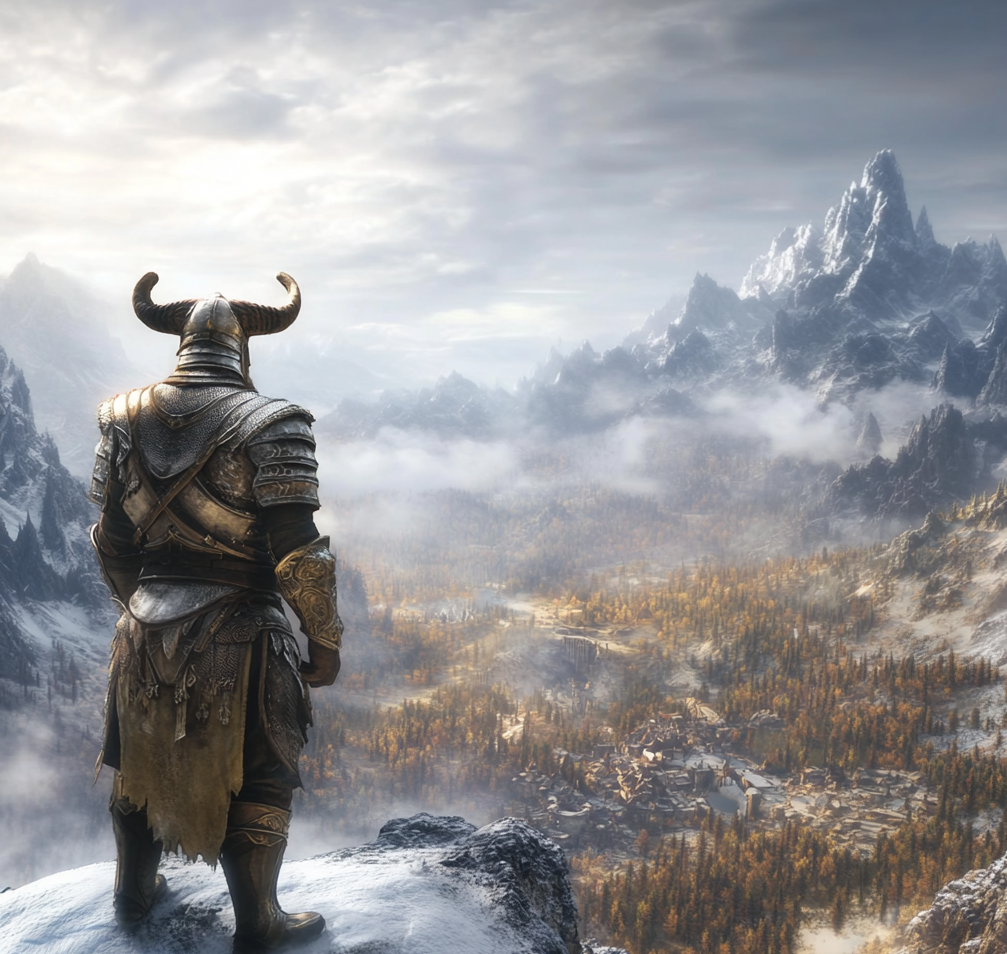
Even over a decade after its initial release, The Elder Scrolls V: Skyrim remains a dominant force in the PC gaming world. Across all genres, active modding communities help shape the lifespan and cultural impact of PC games. Enhancing graphics, crafting entirely new storylines, or fundamentally overhauling gameplay systems keeps titles feeling fresh long after launch.
Narrative expansions, such as exploring new regions in "Beyond Skyrim" or the massive collector's museum in "Legacy of the Dragonborn," demonstrate just how far player ambitions can reach.
In 2026, however, successful modding is no longer about manually and haphazardly installing individual pieces of content. The new standard demands a solid foundation, starting with robust 3D frameworks, followed by advanced lighting and convenient installation automation. Today, the focus has shifted toward curated mod collections designed to eliminate instability.
Key Takeaways and Concepts
- Fundamental 3D Models: A foundational mod like SMIM is practically mandatory for replacing blocky, outdated architecture with highly detailed objects.
- Visual Post-Processing: Players face a technical choice between accessible filters like ReShade or the graphically demanding ENB, depending on their system capabilities.
- Automated Installations: Because manual downloads can be tedious, Wabbajack collections offer an alternative that automatically installs massive mod packages in one go.
Why is SMIM the Indispensable Foundation for Your Setup?
Before visual or narrative expansions can truly shine, the game's underlying geometry usually needs to be modernized. Many default objects in the original Skyrim engine are noticeably blocky or feature visible, overlapping seams. These technical limitations simply no longer align with modern graphical expectations.
From Blocky to Realistic
The Static Mesh Improvement Mod (SMIM) serves as the structural backbone for virtually every modern installation. SMIM replaces a vast array of 3D objects in Skyrim—such as cabinets, chains, and fences—with significantly more detailed versions. This overhaul instantly makes physical objects look much more realistic within the game world.
Beyond the geometric improvements, the modification also smooths out rendering errors in the in-game models, resulting in crisper and cleaner accompanying textures.
The Baseline for Compatibility
In the modern modding scene, SMIM is considered a structural necessity by many veteran modders. Countless other Skyrim mods, ranging from architectural overhauls to interior tweaks, list SMIM as an explicit requirement or have been specifically tailored for compatibility with it.
With this underlying framework in place, other additions tend to run much smoother. Large-scale graphical overhauls look significantly better because they rely on these revamped 3D meshes. Anyone looking for a stable foundation for further tweaking usually installs this mesh replacer as their very first step.
How Do You Choose Between SMIM, ReShade, and ENB?
After correcting the 3D models, lighting and shadows are the logical next step. Today's users navigate between various technical tiers to modernize the game's visuals. To determine which tool best suits your PC, we've outlined the Visual Upgrade Matrix below.
| Graphical Tool | Technical Intervention | Installation Complexity | Impact and Compatibility |
|---|---|---|---|
| SMIM (Meshes) | Direct replacement of 3D meshes and textures | Low (standard via mod manager) | Serves as a safe foundation, high compatibility |
| ReShade (Filters) | Visual filter layer applied over the rendered image | Medium (requires external software) | Adjusts contrast and sharpness, minor performance hit |
| ENB (Engine) | Deep engine modification for lighting rendering | High (manual file placement) | Heavy performance cost, higher risk of instability |
The Choice for Post-Processing
While mesh replacements improve objects, they do nothing to alter the atmosphere created by lighting. For that, modders turn to external software. ReShade isn't a standard Skyrim mod but a standalone program, available at reshade.me, that acts as an additional visual layer injected on top of the game client.
Testing ReShade shows that, without extensive tweaking, the out-of-the-box results can be underwhelming. By default, the world generally just becomes brighter and gains some depth of field, which falls far short of the spectacular visuals players often hope for.
ENB and Compatibility Risks
For users looking to push graphical boundaries to the absolute limit, ENB is usually considered the next logical step. The drawback is that this engine-level modification is significantly more demanding to install and configure than ReShade's post-processing.
Fortunately, compatibility between the two systems has vastly improved today, with ENB now offering native support for ReShade. Players combining both elements generally enjoy a stable coexistence in most modern setups, though specific combinations may still require some careful configuration.
Why is the 2026 Strategy Shifting Toward Wabbajack Collections?
A modern, comprehensive mod setup can easily encompass thousands of individual files. Beyond visual upgrades, players integrate complex gameplay tweaks and weather mechanics like "Frostfall." This massive scaling inevitably brings logistical hurdles.
The primary barrier to large-scale installations isn't always GPU processing power, but rather bandwidth volume and the need for troubleshooting. Those downloading huge archives from platforms like Nexus Mods for free may encounter dynamically capped transfer speeds—an experience that can vary wildly depending on the user and the time of day.
When dealing with multi-gigabyte textures, this process can take an eternity, depending on server load. This serves as a practical argument for users to consider a Premium subscription to bypass network restrictions.
Automation Through Curated Archives
To avoid delays and file conflicts, the trend is shifting toward external automation. Using software like Wabbajack or curated Nexus Mods collections, players can install massive mod packs assembled by veteran modders in a single, streamlined workflow.
Instead of manually researching which patches are needed to flawlessly integrate each file, the management software orchestrates the process mechanically. Programs like Wabbajack download the archives and automatically replicate the curator's pre-compiled mod list, complete with already-configured patches.
The Downside of Collections
Despite the convenience, these automated mod packs come with clear limitations. Curated lists often strip players of granular control; manually adding or removing a single, specific mod can render the entire list unusable. Furthermore, they demand colossal amounts of storage space, require frequent updates, and make troubleshooting significantly more complex when mods unexpectedly conflict within the closed ecosystem of the pack.
Frequently Asked Questions (FAQ) About Skyrim Modding
Does Skyrim VR require a fundamentally different approach to modding?
Yes, the virtual reality setup differs architecturally from the desktop client. For Skyrim VR, Reshade requires a different approach, as the software needs to specifically hook into the stereoscopic render pipeline of the VR headset. A PSVR2-PCVR setup for modded VR gameplay also introduces its own unique technical considerations.
Why Does Reshade Look Less Impressive In-Game Than Online?
The visual impact heavily relies on your broader configuration. Testing shows that Reshade's default effects can sometimes be underwhelming, primarily focusing on brightness and basic depth of field. The photorealistic screenshots published online often utilize heavily tweaked filter profiles, specialized weather mods, and a meticulously calibrated ENB framework that directly controls the lighting.
What Does This Mean for the Future of Skyrim Modding?
Modding in 2026 is all about smart file management and software stability. Successfully creating an enriched in-game environment no longer relies on manually scraping together individual files, but rather on a solid investment in a 3D architectural foundation like SMIM, alongside streamlined software distribution via mod collections.
As these packages continue to balloon in file size, the reliance on robust curation tools and high-speed bandwidth will only grow. For the broader gaming industry, this raises an interesting question: will developers eventually integrate the external infrastructure of systems like Wabbajack natively into their own games?