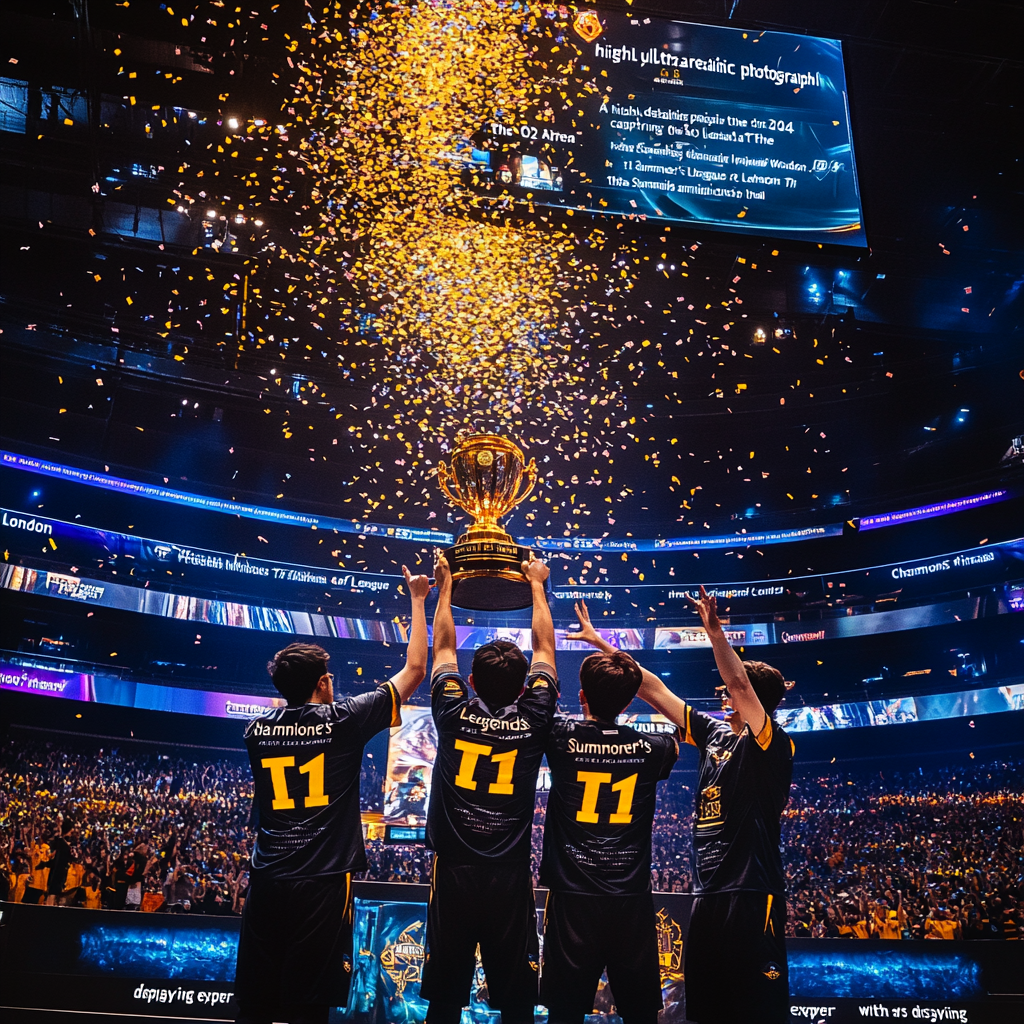
The Meteoric Rise of Esports

"Esports: the meteoric rise into the future of gaming."
The meteoric rise of esports, or electronic sports, is a global phenomenon that has transformed the landscape of entertainment and competition over the past two decades. Once marginalized and restricted to a niche of video game enthusiasts, the sector has experienced exponential growth, attracting millions of viewers and generating colossal revenues. Broadcast live on streaming platforms and in stadiums packed with fans, esports tournaments now rival traditional sporting events in terms of popularity and media impact. This surge in prominence stems from several factors, notably improvements in communication technologies, increased internet connectivity, and the boom of online communities. Esports has become a genuine cultural phenomenon, influencing not only the video game industry but also marketing, media, and even education.
The Economic Impact of Esports on the Video Game Industry
The rapid ascent of esports has dramatically transformed the video game industry, creating a significant economic impact that warrants closer attention. First and foremost, it is essential to understand that esports—competitive video gaming—is often organized into tournaments and followed by millions of spectators worldwide. This growing popularity has not only drawn a massive audience but has also generated substantial revenue for game developers, tournament organizers, and broadcasting platforms.
One of the most striking aspects of the economic impact of esports is the surge in video game sales. Popular esports titles, such as "League of Legends," "Dota 2," and "Counter-Strike: Global Offensive," have seen their sales skyrocket thanks to increased visibility and player enthusiasm for competitive gaming. This momentum has prompted developers to invest more heavily in creating games designed specifically for the esports market, thereby fostering a virtuous cycle of growth and innovation.
At the same time, esports has fueled demand for high-quality gaming equipment. Both professional and amateur players are constantly on the lookout for peripherals—such as keyboards, mice, headsets, and monitors—that deliver optimal performance. This demand has led to a rapid expansion of the gaming accessories market, with specialized companies competing to offer the most technologically advanced products. Consequently, gaming hardware manufacturers have seen their revenues increase significantly, contributing to the overall economic boom of the video game industry.
Furthermore, esports has opened up new monetization opportunities for game developers and tournament organizers. Broadcasting rights, sponsorships, and advertising represent major revenue streams. Streaming platforms like Twitch and YouTube Gaming have capitalized on this trend by offering ad space and paid subscriptions, thereby generating substantial income. Non-endemic brands—those not directly tied to the video game industry—have also begun investing in esports, recognizing its potential to reach a young, highly engaged audience.
Additionally, esports has spurred job creation across various sectors. Roles such as game developers, community managers, esports commentators, and analysts have become increasingly commonplace. Professional esports teams also employ coaches, nutritionists, and psychologists to optimize their players' performance. This diversification of employment opportunities has contributed to the economic growth and professionalization of the video game industry.
Finally, esports has driven investment in technological infrastructure. Esports tournaments require cutting-edge facilities to ensure seamless broadcasting and an optimal gaming experience. Esports stadiums, training facilities, and virtual arenas have become attractive investment projects, drawing significant capital and boosting the local economy.
In short, the economic impact of esports on the video game industry is undeniable. From boosting game and hardware sales to creating new monetization and employment opportunities, esports has reshaped the economic landscape of the sector. This transformation continues to unfold, promising an even more prosperous future for the video game industry.
Key Factors Behind the Growing Popularity of Esports
The meteoric rise of esports over the past few years is a phenomenon that continues to surprise and intrigue. Several key factors have contributed to this growing popularity, each playing a crucial role in establishing esports as a respected discipline followed by millions worldwide. To understand this surge, it is essential to examine the elements that have fueled this rapid expansion.
First and foremost, technological advancement has been a major catalyst. The constant improvement of internet infrastructure and computing hardware has allowed more people to easily access online video games. High-speed connections and powerful computers have made a smooth, immersive gaming experience possible, which is essential for attracting and retaining players. Moreover, streaming platforms like Twitch and YouTube Gaming have provided simple and effective ways to broadcast live competitions, allowing viewers to follow their favorite teams and players in real time.
In parallel, the professionalization of esports has played a decisive role. Video game tournaments are now organized with a level of professionalism comparable to that of traditional sporting events. Professional gamers benefit from contracts, salaries, and sponsorships, allowing them to dedicate themselves entirely to their passion. This professionalization has also attracted investors and corporations, who see esports as a lucrative opportunity. Renowned brands no longer hesitate to partner with teams or events, bringing further legitimacy to the discipline.
Another key factor lies in the community of players and fans. Esports has successfully cultivated a distinct culture around video games, complete with forums, social networks, and live events that bring together millions of enthusiasts. This active and engaged community contributes to the popularity of esports by sharing content, organizing meetups, and supporting players. Fans play a crucial role in creating a unique atmosphere during competitions, rivaling the energy found in football stadiums or basketball arenas.
The sheer variety of games on offer is also a crucial factor. Unlike traditional sports, esports encompasses a multitude of genres and titles, ranging from real-time strategy and first-person shooters to fighting games and sports simulations. This diversity draws in a broad audience, ensuring everyone can find a game tailored to their tastes and skill levels. Furthermore, video game developers are increasingly investing in the creation of titles specifically designed for competitive play, featuring balanced gameplay mechanics and regular updates to keep players engaged.
Finally, the social and interactive nature of esports should not be underestimated. Streaming platforms and social networks allow fans to interact directly with players and commentators, forging a strong, personal connection. This interaction deepens viewer engagement and helps build audience loyalty. Live events, such as world championships, also provide unique opportunities to meet up and share the experience, strengthening the sense of belonging to a global community.
Ultimately, the meteoric rise of esports is the result of a perfect storm of technological, economic, social, and cultural factors. Each of these elements has played a part in transforming competitive gaming into a worldwide phenomenon that attracts millions of players and spectators. As esports continues to evolve, we are likely to see even more innovation and growth in the years to come, cementing its place in the modern entertainment landscape.
The Evolution of Esports Competitions: From Arcades to International Stadiums
Esports, or electronic sports, has undergone a spectacular evolution over the past few decades, transitioning from simple local competitions in video arcades to international events drawing millions of viewers. This transformation is driven not only by technological innovation but also by the growing recognition of esports as a legitimate and competitive discipline. To fully grasp this meteoric rise, it is essential to trace the key milestones of its evolution.
In the early days, video game competitions were primarily held in arcades and local gaming centers. These events were often informal and attracted a niche audience made up mostly of hardcore gaming enthusiasts. However, with the advent of home consoles and personal computers in the 1980s and 1990s, competitive gaming began to gain traction. Tournaments for games like "Street Fighter" and "StarCraft" drew increasingly large numbers of players, ushering in a new era for esports.
The real revolution came with the boom of the internet in the late 1990s and early 2000s. Online connectivity allowed gamers to face off remotely, paving the way for global competitions. Platforms like Blizzard's Battle.net and Microsoft's Xbox Live facilitated the organization of online tournaments, making esports accessible to a much broader audience. Concurrently, websites dedicated to broadcasting these competitions began to emerge, enabling fans to follow their favorite players and teams in real time.
The next stage in the evolution of esports was defined by the professionalization of the sector. Professional organizations began to emerge, offering contracts and salaries to top-tier talent. Structured leagues and tournaments, such as Major League Gaming (MLG) and the Electronic Sports League (ESL), were established, bringing greater framework and legitimacy to competitive gaming. This professional shift also caught the eye of sponsors and investors, injecting substantial capital into the industry and enabling the production of increasingly spectacular events.
One of the most iconic milestones in this evolution was the hosting of tournaments in stadiums and arenas, drawing thousands of in-person attendees alongside millions watching online. Events like Dota 2’s The International and the League of Legends World Championship have proven that esports can rival traditional sports in both popularity and sheer hype. Today, these competitions are broadcast on television networks and streaming platforms like Twitch, reaching a truly global audience.
At the same time, official recognition from sporting institutions and governments has bolstered the legitimacy of esports. Several countries have begun to recognize professional esports players as full-fledged athletes, granting them special visas to compete internationally. Furthermore, ongoing discussions about including esports in traditional sporting events, such as the Olympic Games, highlight its growing integration into the global sports landscape.
In conclusion, the evolution of esports competitions—from humble arcades to massive international stadiums—stems from a dynamic blend of technological, economic, and social factors. This transformation has not only shifted public perception of esports but has also unlocked new opportunities for players, fans, and investors alike. As competitive gaming continues to grow and diversify, it is clear that this discipline is here to stay, fundamentally redefining the boundaries of sports and entertainment.
Career Opportunities in the Esports Industry
The esports industry is experiencing exponential growth, transforming what was once a mere hobby into a booming professional sector. This rapid expansion has opened up a wealth of career opportunities for video game enthusiasts and professionals across various fields. Indeed, esports is no longer limited to competitive gamers; it now encompasses a multitude of roles essential to the smooth operation of this dynamic industry.
First and foremost, it is crucial to recognize the central role of professional players. These digital athletes are the beating heart of esports, competing in international tournaments and representing sponsored teams. Their success relies not only on their technical prowess but also on their teamwork and ability to handle pressure. However, becoming a pro gamer is just one of many possible career paths in esports.
Alongside the players, coaches and analysts play an indispensable role. They are responsible for training rosters, developing strategies, and breaking down performance metrics. These professionals must possess an in-depth knowledge of the games as well as strong team management skills. Their behind-the-scenes work is often the key to a team's success on the competitive stage.
Additionally, the esports ecosystem offers lucrative opportunities for content creators and streamers. These individuals produce videos, broadcast live gameplay, and interact directly with online communities. Their popularity can attract major sponsors and generate substantial revenue. Successful content creation requires more than just gaming skills; it demands a solid understanding of social media and digital marketing.
Furthermore, tournament organizers and event managers play a pivotal role in esports. They are responsible for planning and executing competitions, ensuring a seamless experience for both participants and spectators. These professionals must possess skills in project management, logistics, and communication. Their work ensures that events run smoothly and deliver a high-quality spectacle.
Moreover, career opportunities in esports are not limited to roles directly tied to competitions. Game developers, graphic designers, and software engineers are equally essential. They create and maintain the games that serve as the very foundation of esports. Their technical expertise and creativity are indispensable for delivering captivating and innovative gaming experiences.
Marketing and public relations professionals also play a key role in promoting esports. Working for teams, sponsors, and event organizers, they develop strategies to attract and engage audiences. Their efforts directly contribute to audience growth and drive the industry's revenue.
Finally, it is important to highlight opportunities in management and administration. Team directors, player agents, and community managers are vital to the smooth operation of esports organizations. By handling the financial, legal, and operational aspects, they allow players and teams to focus entirely on the competition.
In conclusion, the esports industry offers a wealth of career opportunities for video game enthusiasts and professionals across various fields. Whether as a player, coach, content creator, event organizer, game developer, marketing professional, or manager, anyone can find their place in this booming sector. As esports continues to grow, career possibilities will only continue to diversify and expand.
The Influence of Social Media on the Growth of Esports
The meteoric rise of esports in recent years is undeniably linked to the growing influence of social media. These digital platforms have played a crucial role in popularizing and legitimizing a discipline that was once marginalized. In fact, social networks have fostered a global community of fans and players, facilitating the exchange of information and the distribution of esports content. This dynamic has helped transform esports into a global cultural phenomenon.
One of the most striking aspects of this influence is how social media has democratized access to esports. Thanks to platforms like YouTube, Twitch, and Facebook, video game enthusiasts can now watch live competitions, training sessions, and match analyses. This accessibility has not only attracted new viewers but has also allowed professional players to build a loyal fanbase. Furthermore, social media gives players the ability to share their experiences and strategies, creating an environment of continuous learning and improvement.
Moreover, social networks have facilitated communication among the various stakeholders in esports, from players and coaches to sponsors and fans. Interactions on Twitter, Instagram, and other platforms help strengthen bonds within the esports community. Players can receive real-time feedback on their performances, while fans can express their support and admiration. This interactivity helps humanize the players, making them more accessible and relatable to their audience.
Social media has also played a defining role in the professionalization of esports. Digital platforms provide players and teams with a showcase to attract sponsors and partnerships. Brands, keenly aware of the massive visibility potential offered by esports, are increasingly investing in the sector. Consequently, social media creates economic opportunities for players, teams, and tournament organizers. This professionalization has also led to improved working conditions and infrastructure, contributing to the recognition of esports as a legitimate discipline in its own right.
Additionally, social networks have diversified esports content. Gameplay videos, tutorials, interviews, and documentaries offer a multitude of perspectives on the esports world. This diversity of content helps reach a broader audience, sparking the interest of people who may not necessarily be gamers themselves. By making esports more accessible and easier to understand, social media contributes significantly to its expansion and legitimation.
Finally, it is important to note that social media has also played a role in the regulation and ethics of esports. Online discussions on topics such as fair play, player mental health, and anti-cheat measures have led to collective awareness and the implementation of safeguards to improve the discipline's integrity. Social networks thus serve as a platform for constructive debate and the promotion of positive values within the esports community.
In short, the influence of social media on the growth of esports is undeniable. These platforms have not only democratized access to the discipline but have also contributed to its professionalization, the diversification of its content, and the promotion of ethical values. Thanks to social media, esports has transformed into a global cultural phenomenon, attracting millions of fans worldwide and redefining the boundaries of digital entertainment. The meteoric rise of esports is marked by exponential growth in popularity, viewership, and revenue. This phenomenon is fueled by the rise of streaming platforms, the organization of prestigious international tournaments, and the growing recognition of professional players. Esports has successfully established itself as a legitimate competitive discipline, attracting massive investments and a devoted fanbase, and now rivals traditional sports in terms of cultural and economic influence.