The Challenges of Indie Game Development
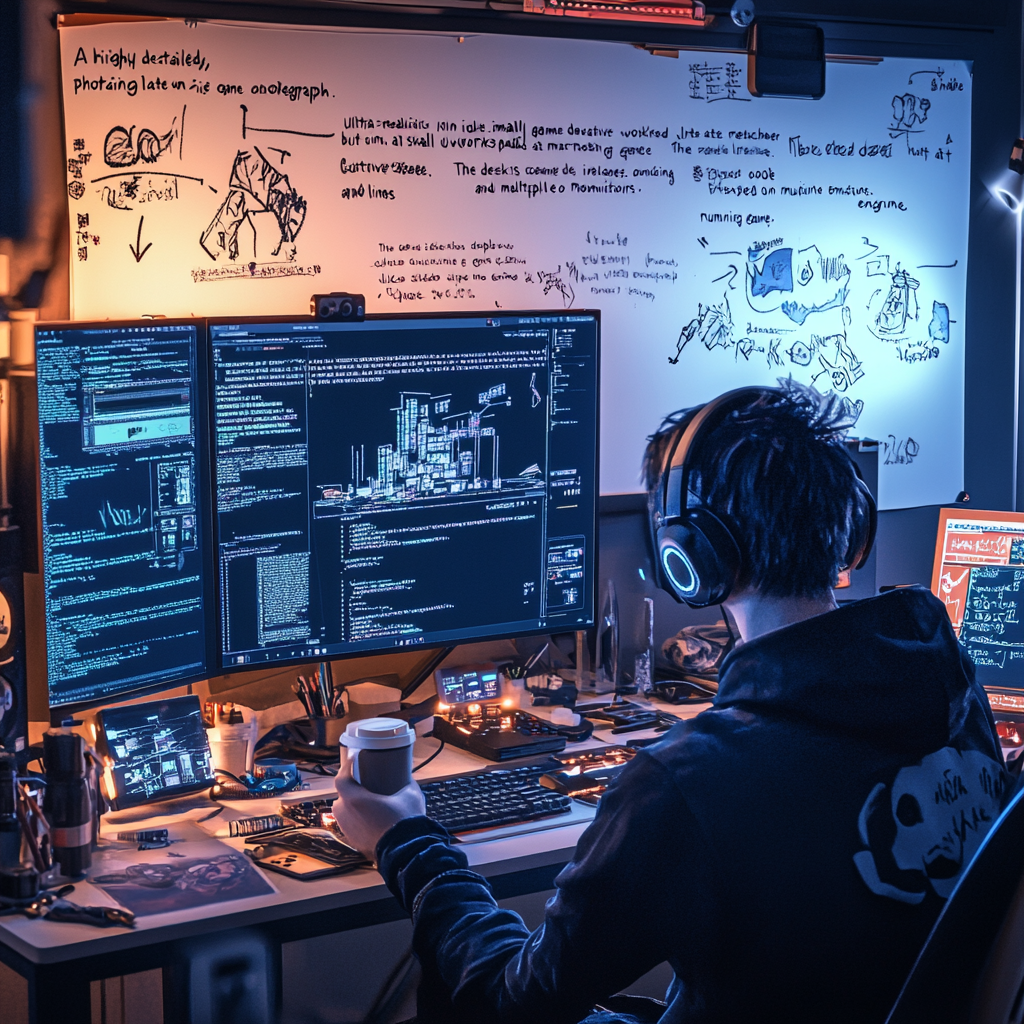
What Are the Real Challenges of Indie Game Development Today?
The cliché of the lone developer coding in a garage has evolved. Today, creating an indie game is more akin to running a startup than pursuing an isolated digital hobby. The market is saturated, player expectations are sky-high, and competition is fierce.
Up against blockbuster titles backed by massive teams and colossal budgets, indie creators must be highly adaptable. The lack of bottomless resources forces developers to explore unconventional paths.
Limitations breed creativity. While a major publisher must appeal to the widest possible audience to recoup its investments, an indie studio has the freedom to experiment and deliver entirely unique concepts.
Understanding this dynamic is crucial. To thrive, modern developers must learn to structure their entrepreneurial approach, turning every technical or financial hurdle into a deliberate design choice.
What Are the Core Concepts for Rethinking Your Strategic Approach?
Before diving into the inner workings of indie development, here are the core concepts you need to rethink your strategic approach:
- Agility vs. Behemoths: Leverage your small size to pivot quickly, whereas major studios are often bogged down by internal bureaucracy.
- Local Ecosystems: Funding doesn't end with crowdfunding. Institutional and regional grants are powerful levers.
- The Aesthetics of Limitation: Artistic choices (such as pixel art or low poly) should double as technical optimizations to bypass limited computing power.
- The War on Feature Creep: Knowing when to cut features is crucial to ensure your game actually crosses the finish line.
- Early Marketing: Promotion should begin at the prototype stage to build a community long before the final release.
How to Turn Your Weaknesses into Advantages Against AAA Studios
Comparing the indie scene to the mainstream industry usually highlights a stark contrast in resources. It’s a given that indie developers have to make do with limited financial and human capital compared to massive productions. However, viewing this discrepancy solely as a handicap severely limits your perspective.
Agility as a Strategic Asset
A five-person team can make decisions on the fly. Conversely, a major studio often requires endless meetings, hierarchical approvals, and audience testing just to greenlight a pivot. This inertia is a common vulnerability among the industry's titans.
Free from corporate pressure, indie studios have the bandwidth to take far greater risks. They can explore mature themes, highly niche gameplay mechanics, or cryptic narratives that big-budget productions generally shy away from.
Strategic Advantage Breakdown
Here is how the inherent weaknesses of small-scale production can be flipped into distinct advantages over major organizations:
| Indie Constraint | Major Studio Flaw | Exploitable Strategic Advantage |
|---|---|---|
| Small budgets | Financial risk aversion | Freedom to take narrative and thematic risks |
| Small teams | Bureaucracy and sluggish decision-making | Immediate creative pivots and rapid iteration |
| Modest technical resources | Visual homogenization driven by photorealism | Creation of a truly unique visual identity |
| No established IP | Over-reliance on existing franchises | The element of surprise and building a grassroots community |
By adopting this mindset, a lack of resources actually becomes a core feature of the game’s value proposition. The goal isn't to beat AAA titles at their own game, but rather to offer an experience that boldly diverges from mainstream conventions.
How to Build a Resilient Budget from Day One
The viability of an indie project depends entirely on its ability to survive until launch. As previously noted, indie developers operate with significantly fewer financial and human resources than blockbuster productions. This reality requires rigorous financial management.
Mastering Your Burn Rate
Your "burn rate"—the speed at which a studio exhausts its available capital—is a fundamental survival metric. Sound management means accurately calculating all fixed costs, including software, servers, outsourcing, and salaries.
Successful studios maximize the impact of every dollar spent. For instance, rather than spreading their budget too thin, the creators behind the best indie games often choose to focus their investment on a single, innovative core mechanic rather than wasting funds on costly peripheral features.
Contingency Planning
Game development is fraught with uncertainty. A resilient budget doesn't just cover projected expenses; it anticipates the unexpected. Here are the contingencies you should build in from the start:
- Buffer Time: Development delays inevitably lead to additional fixed costs, such as rent and software subscriptions.
- Last-Minute Licensing: Unexpected needs for specific plugins or additional music tracks.
- Post-Launch Expenses: Costs related to multiplayer servers, deploying urgent hotfixes, and post-launch promotional pushes.
Rigorous budgeting provides the much-needed stability to design your game with peace of mind.
What Role Do Local Ecosystems Play in Funding? (The Belgian Example)
Crowdfunding via platforms like Kickstarter or Indiegogo is a common route for indie developers. However, these platforms demand a massive marketing investment, effectively turning the fundraising campaign into a standalone project with its own set of failure risks.
The Rise of Institutional Support
To secure a production over the long haul, it is highly strategic to look toward less volatile mechanisms than crowdfunding. This is where regional roots truly matter. The Belgian ecosystem perfectly illustrates this structural shift within the indie industry.
Rather than relying solely on individual backers, developers are increasingly structuring their companies to capture institutional funding.
The Belgian Model and Creative Grants
Belgium offers grants and subsidies designed specifically to de-risk the production phase:
- Regional Investment Funds: Entities like screen.brussels actively co-finance interactive projects, simultaneously validating a game’s commercial viability.
- Support Networks: Trade associations such as WALGA (Wallonia Games Association) provide logistical and legal support, alongside access to international publishers.
By tapping into a local ecosystem and mastering grant applications, a studio can significantly boost its production budget. Successfully navigating your region's institutional landscape is a highly valuable skill.
Why Does Team Building Come Before Technical Challenges?
The solo developer building a game entirely from scratch is a statistical anomaly, albeit one heavily romanticized by the press. In reality, the multidisciplinary nature of interactive media demands a synergy of talents.
Building an effective team relies on clear roles, open communication, diverse skill sets, and a supportive work environment. Without this human foundation, individual technical skills will struggle to produce a cohesive final product.
Structuring Teamwork
Attracting talent to a fledgling studio requires offsetting the lack of initial financial security with other incentives, such as complete transparency regarding the project's status.
A geographically dispersed team—especially one where members are juggling the project alongside a day job—requires rigorous organization:
- Asynchronous communication: This becomes the norm. Project management tools like Trello, Asana, or Jira are invaluable for coordinating tasks.
- Defining boundaries: It is crucial to establish exactly who gets the final say on artistic or technical decisions.
Adaptable leadership ensures that the team's collective energy drives toward a shared vision.
How Do Technical Constraints Dictate Art Direction?
On the development front, indie creators must overcome technical hurdles such as graphics optimization, cross-platform compatibility, and bug management.
Rather than trying to compete in the realm of photorealism or sprawling open worlds, indie developers use tech constraints as a tool for stylization.
The Aesthetics of Performance
Choosing an art direction isn’t solely about the creator's artistic sensibilities; it’s often a pragmatic response to engine or hardware limitations.
- Pixel Art and Low Poly: These visual styles cut down on modeling time and texture file sizes, ensuring the game runs smoothly across a wide range of hardware.
- Cel-shading: Beyond its distinct aesthetic, cel-shading cleverly masks imperfections in dynamic lighting that would otherwise require massive computing power to look realistic.
The Porting and Debugging Process
Ensuring a game runs flawlessly on PC, consoles, and potentially mobile devices requires meticulous planning. Every architecture comes with its own specificities.
An indie team must design its code modularly right from the start. Integrating automated testing and launching community beta tests are vital steps. By getting players involved early, the studio gathers feedback that helps squash bugs the internal team might never have caught on their own.
How to Avoid the "Feature Creep" Trap During Development
Time is the ultimate currency for an indie studio. Managing deadlines demands meticulous planning, and one of the most common pitfalls is the unplanned addition of new ideas mid-development.
The Phenomenon of Feature Creep
"Feature creep" refers to the continuous, unchecked addition of new mechanics throughout a game's development cycle. It usually stems from good intentions: the desire to tack on a multiplayer mode, an extra skill tree, or a handful of side quests.
However, every new addition brings extra phases of coding, asset creation, balancing, and debugging. A project slated for a twelve-month turnaround can easily stretch into several years, ballooning costs along the way.
The Rigor of Scoping
To actually ship a game, developers must often ruthlessly focus on its core essence. Scoping requires strict discipline:
- Identify the core gameplay loop: Peripheral features can usually be saved for a post-launch update.
- Establish an MVP (Minimum Viable Product): Aim for a functional, streamlined version of the game before even considering expansions.
- Safeguard the polishing phase: It is almost always better to release a short, bug-free game than a massive, unpolished mess.
Why Indie Marketing Must Start at the Prototype Stage
Waiting until the end of the production cycle to kick off your promotional campaign is a massive risk. Marketing and distribution strategies should be mapped out from day one, leveraging social media, content creators, and digital platforms.
Showcasing the Creative Process
Players are often fascinated by the story behind a game's creation. Sharing prototype GIFs, concept art, or deep dives into technical hurdles generates visibility. This builds a genuine connection with your audience and steadily grows brand awareness.
The Importance of Wishlists
On distribution platforms like Steam, the storefront algorithm is heavily influenced by wishlists.
- Organic visibility: Games that amass a significant number of wishlists prior to launch are far more likely to be featured organically on the platform.
- The power of digital festivals: Participating in online events like Steam Next Fest with a playable demo is a tried-and-true strategy for driving those crucial wishlist additions.
Ultimately, indie marketing relies heavily on consistent, ongoing community management.
Frequently Asked Questions About Indie Development Challenges
What are the best tools for managing an indie game project?
Project organization generally relies on task-tracking tools like Trello or Jira. For team communication, Discord and Slack are industry standards. Finally, a version control system (such as Git or Perforce) is absolutely essential for backing up and managing your codebase.
When should I start talking about my game?
As soon as you have an appealing visual or an understandable mechanic (showcased via a quick GIF). Marketing yields the best results when it begins at the prototype stage, allowing you to patiently build a core audience well before your final storefront page goes live.
How can I handle cross-platform porting on a tight budget?
Design your game with the hardware limitations of your weakest target platform in mind from day one. Using a versatile game engine (like Unity, Unreal, or Godot) and strictly separating your core game logic from control inputs will make the porting process much smoother.
How Does Embracing Constraints Liberate Creativity?
Creating an indie video game demands rigorous organization. Budget limits, technical constraints, and strict deadlines are foundational elements that can actually fuel originality.
By leaning on local ecosystems, structuring teamwork effectively, and committing to bold creative choices, indie developers cultivate a highly specific skill set. In the shadow of massive AAA productions, the indie game thrives by offering a truly unique vision and fostering an intimate relationship with its community.