Pixel Art
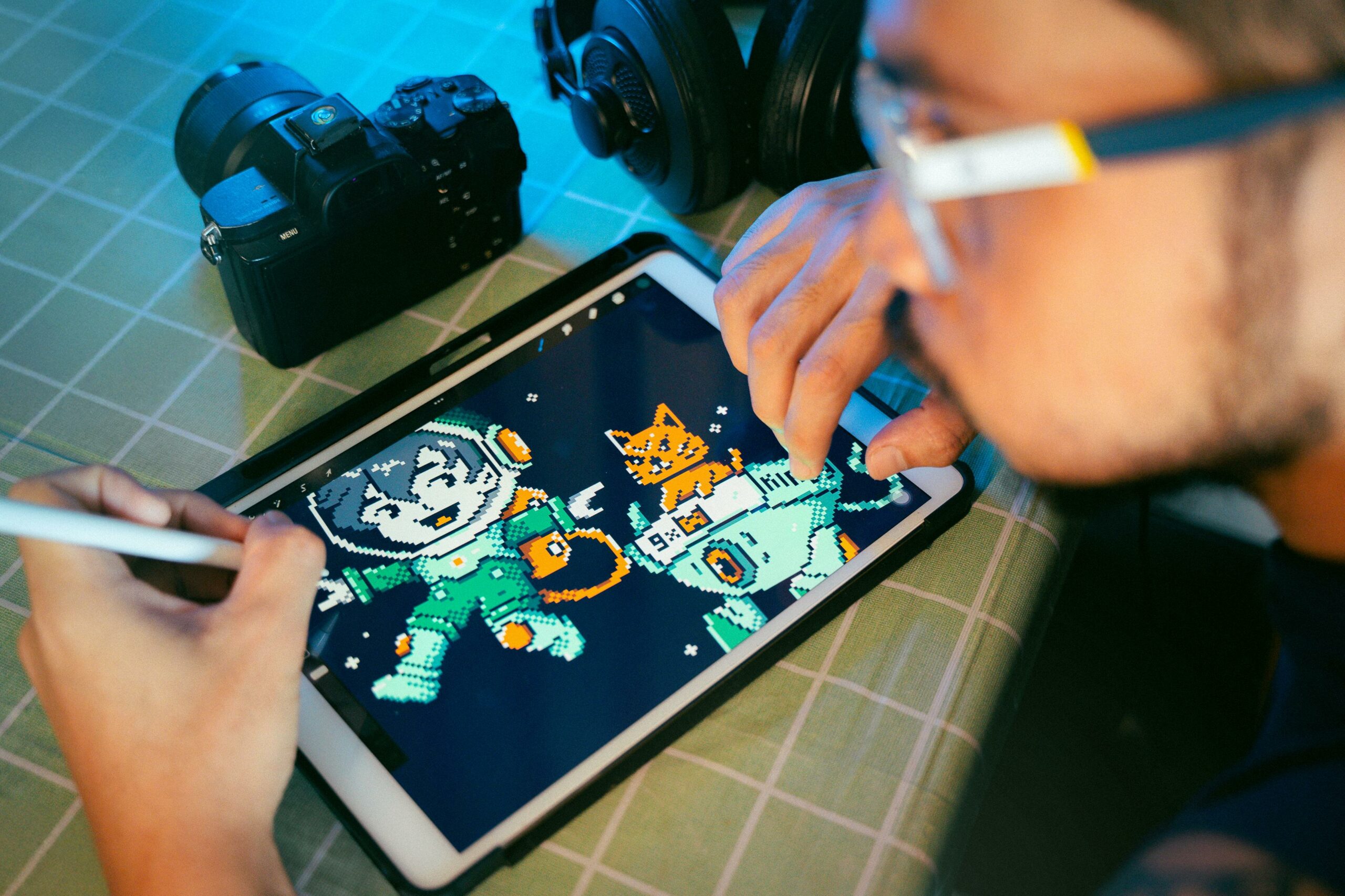
“Pixel Art: Creativity in the blink of an eye.”
Pixel art is a digital art form rooted in the early days of computing and video games. Characterized by the use of individual pixels as its foundational units, it evokes a retro aesthetic reminiscent of the console and computer graphics of the 1980s and 1990s. Every pixel art image is meticulously crafted pixel by pixel, demanding an acute attention to detail and a mastery of limited color palettes. This technical constraint forces artists to channel their creativity, conveying shapes, movement, and emotion with minimal resources. Today, pixel art is experiencing a major resurgence, prized for its nostalgic charm and its unique ability to seamlessly blend simplicity with visual complexity.
The History and Evolution of Pixel Art
Pixel art, a form of digital art that uses pixels as a basic unit, has a rich and fascinating history dating back to the dawn of computing. It emerged in the 1970s and 1980s, an era when computer graphic capabilities were highly restricted. Artists of the time had to work with extremely low resolutions and a limited color palette, forcing them to get creative to produce visually appealing imagery. This technical limitation gave rise to a distinctive style that became the hallmark of early video games and user interfaces.
Over the years, pixel art evolved alongside technological advancements. In the 1980s, gaming consoles like the Nintendo Entertainment System (NES) and the Sega Master System popularized the medium through their 8-bit graphics. The hardware constraints of these consoles pushed developers to maximize the visual impact of every single pixel, resulting in the creation of unforgettable characters and game worlds. Titles from this era, such as Super Mario Bros. and The Legend of Zelda, not only defined pixel art but also influenced entire generations of creators.
As the 1990s rolled in, the graphical capabilities of computers and consoles continued to improve, allowing for higher resolutions and broader color palettes. Yet, despite these advancements, pixel art maintained its popularity. The 16-bit era, driven by consoles like the Super Nintendo and Sega Genesis, allowed artists to craft far more detailed works while retaining that signature pixelated aesthetic. This period witnessed the emergence of visual masterpieces like Chrono Trigger and Sonic the Hedgehog, proving that pixel art was more than capable of telling complex, immersive stories.
The evolution of pixel art didn't stop with the advent of 3D graphics in the 2000s. Although the video game industry largely pivoted to 3D, pixel art experienced a massive resurgence thanks to the indie gaming scene. Independent developers rediscovered the charm and simplicity of the medium, using it to build games that evoke deep nostalgia while simultaneously innovating in gameplay and narrative. Acclaimed titles like Fez, Stardew Valley, and Celeste have proven that pixel art can be both modern and timeless, drawing in a new, diverse audience.
Today, pixel art continues to evolve and adapt to modern technology. Artists now use contemporary tools to create remarkably complex and beautiful pieces, all while honoring the fundamental principles of the craft. Pixel art has also transcended video games as a medium of expression, appearing in digital art collections, animations, and even physical art installations. This ability to continuously reinvent itself while staying true to its roots is a testament to the resilience and ongoing relevance of pixel art in the contemporary artistic landscape.
Ultimately, the history and evolution of pixel art illustrate how an initial technical constraint gave rise to an enduring and adaptable art form. From its humble beginnings to today's modern creations, pixel art has consistently captivated the imagination of both artists and audiences, proving that even the simplest forms of art can leave a profound and lasting impact.
Essential Techniques for Creating Pixel Art
Pixel art, a digital art form dating back to the dawn of computing, continues to captivate artists and video game enthusiasts alike. This artistic technique relies on creating images using pixels—the smallest graphical units on a screen. To master this craft, it is essential to understand and apply fundamental techniques that help bring visually appealing and highly expressive works to life.
First and foremost, choosing the right color palette is crucial. In pixel art, limiting your colors is often a deliberate constraint designed to spark creativity. A thoughtfully curated palette can elevate a simple image into a striking piece of art. Artists must select colors that complement each other and establish effective contrast. Furthermore, the strategic use of shades and tints can add significant depth and dimension to the artwork, even with a highly restricted color count.
Next, the technique of dithering is an essential skill for any pixel artist. Dithering involves blending two colors by creating a pattern of alternating pixels, giving the illusion of a new shade or a smooth transition between the two base colors. This technique is especially useful for building gradients or softening the harsh edges of an image. However, it should be used sparingly, as overusing dithering can make an image look cluttered or visually confusing.
Line work, or outline management, is another cornerstone of pixel art. Outlines define the shapes and objects within an image, and how they are handled heavily influences the final look of the piece. Lines can be sharp and bold for a more stylized, graphic feel, or softened for a more realistic rendering. The artist must also decide whether to use stark black outlines or colored ones, as each approach drastically shifts the image's overall aesthetic.
At the same time, mastering perspective and proportion is vital for creating coherent and believable scenes. In pixel art—where every single pixel matters—accurately scaling objects and characters is non-negotiable. Isometric perspective is incredibly popular in the medium, as it allows artists to depict three-dimensional objects while maintaining clean, readable graphical simplicity.
Finally, animation introduces an entirely new dimension to pixel art, quite literally bringing a piece to life. Pixel art animations require meticulous planning and an obsessive attention to detail, as every single movement must be broken down into a series of frames. The fluidity of the final animation depends entirely on the consistency and precision of these frames, a process that demands immense patience and dedicated practice.
In conclusion, while pixel art is inherently limited by its very nature, it offers infinite creative richness. By mastering essential techniques like color selection, dithering, line work, perspective, and animation, artists can forge pieces that truly captivate and inspire. With its surface-level simplicity and underlying complexity, pixel art continues to seduce and challenge creators all over the world.
Popular Tools and Software for Pixel Art
Pixel art, a digital art form that relies on individual pixels to create images, has surged in popularity in recent years. This technique, which often evokes the nostalgia of retro video games, requires specific tools and software to be executed effectively. In this article, we will explore some of the most popular tools and software used by pixel artists, highlighting their distinct features and advantages.
To begin with, one of the most highly regarded software programs in the realm of pixel art is Aseprite. Specifically designed for pixel art and animation, it offers an intuitive interface that simplifies the creation of complex artwork. Aseprite stands out for its advanced features, such as layer management, selection tools, and animation options. These capabilities allow artists to create fluid animations and easily manage the various components of their work. Furthermore, Aseprite is compatible with multiple operating systems, making it accessible to a wide range of users.
Another popular tool is Pyxel Edit. This software is particularly prized for its ability to create tiles and tilesets, an essential feature for artists working on video game projects. Pyxel Edit features a simple and efficient user interface, allowing artists to focus on their creativity without being distracted by overly complex functionalities. Additionally, it offers drawing and painting tools that make the creation of repetitive patterns—a crucial aspect of video game design—much easier.
It is also worth mentioning GraphicsGale, another widely used software in the pixel art community. Although its interface may seem a bit dated, GraphicsGale is a powerful tool for creating animations and sprites. It offers features like real-time animation previewing, which allows artists to instantly see the modifications made to their work. This ability to visualize changes in real time is especially useful for artists working on projects that require frequent adjustments.
In addition to desktop software, there are also online tools like Piskel, which allow artists to create pixel art directly in their web browsers. Piskel is an ideal option for those looking for a quick, accessible solution without the need to install any software. It provides basic features for drawing and animation, making it an excellent starting point for beginners. Moreover, Piskel makes it easy to save and share creations, thereby facilitating collaboration among artists.
Finally, we must mention Pro Motion NG, a professional software program used by many video game studios. Pro Motion NG offers a comprehensive suite of tools for pixel art, including advanced features for color palette management and complex animation creation. While this software can be intimidating for beginners due to its extensive feature set, it is incredibly powerful for those looking to take their art to the next level.
In conclusion, the choice of pixel art tools and software largely depends on the individual needs and preferences of each artist. Whether you are a beginner looking to explore this art form or a professional seeking advanced tools, there is a multitude of options available to help bring your creations to life. By exploring these different programs, you will be able to find the one that best suits your style and artistic goals.
How to Sell and Promote Your Pixel Art Online
Pixel art, with its retro charm and visual simplicity, has captured the imagination of many digital artists and art enthusiasts alike. However, turning this passion into a lucrative business requires a well-thought-out strategy to effectively sell and promote your pixel art online. The first step is establishing a strong online presence. Create a digital portfolio that showcases your best work. This portfolio should be easily accessible and well-organized, allowing visitors to navigate seamlessly through your creations. Utilize platforms like Behance, DeviantArt, or ArtStation, which are popular among digital artists and offer increased visibility.
Once your portfolio is set up, it is crucial to choose the right sales platforms. Sites like Etsy, Redbubble, or Society6 allow artists to sell their work as art prints, clothing, or other merchandise. These platforms often handle production and shipping, freeing you up to focus on creation. Make sure to fully understand the fees and terms of each platform to maximize your profits. At the same time, consider creating your own online store using services like Shopify or Big Cartel, which will give you complete control over your brand and products.
Promoting your pixel art is just as essential as selling it. Social media plays a vital role in artistic promotion. Instagram, with its heavy focus on visuals, is particularly well-suited for sharing your pixel art. Use relevant hashtags to reach a broader audience and regularly engage with your community to strengthen your presence. Twitter and Facebook can also be useful for sharing updates and events related to your work. Consider joining dedicated pixel art groups and forums to connect with fellow artists and potential buyers.
Furthermore, email marketing remains a powerful tool for building audience loyalty. Create a mailing list to send out regular newsletters featuring sneak peeks of new artwork, special offers, or blog posts about your creative process. This keeps your subscribers engaged and encourages them to return to your site. You should also think about collaborating with other artists or influencers in the pixel art space. Collaborations can take the form of joint projects, contests, or cross-promotions, thereby boosting your visibility among new audiences.
Lastly, do not forget the importance of quality and authenticity. Ensure that your artwork is of high quality and reflects your unique style. Buyers are often drawn to pieces that tell a story or evoke a specific emotion. Take the time to write detailed descriptions for each piece, explaining your inspiration and creative process. This adds a personal dimension to your art and can encourage potential buyers to make a purchase.
In conclusion, selling and promoting your pixel art online requires a combination of strategy, creativity, and perseverance. By establishing a strong online presence, choosing the right sales platforms, using social media effectively, and maintaining consistent quality, you can transform your passion for pixel art into a thriving business.
The Influence of Pixel Art in Modern Video Games
Pixel art—a digital medium that builds images pixel by pixel—has experienced a remarkable resurgence in modern video gaming. While its roots trace back to the dawn of computing and early video games, its influence remains palpable today. Far from being a mere nostalgic throwback, it has evolved into a deliberate, meaningful aesthetic choice. This impact extends well beyond visual appeal, profoundly shaping game design, user experience, and even narrative structure.
To fully grasp the impact of pixel art on contemporary video games, we must first acknowledge its historical roots. During the 8-bit and 16-bit console eras, pixel art was a technical necessity born of strict hardware limitations. Developers had to rely on sheer ingenuity to maximize visual impact using a severely restricted palette and pixel count. These constraints birthed timeless visual icons and an artistic style that still evokes profound nostalgia for many players. Yet, modern pixel art refuses to merely coast on that nostalgia; instead, it uses it as a springboard to explore entirely new artistic frontiers.
In today's gaming landscape, pixel art is frequently chosen for its ability to channel a retro aesthetic while simultaneously offering immense creative freedom. Independent developers, in particular, have championed this style for its deceptive simplicity and its power to convey complex emotions with minimal resources. Pixel art allows for the creation of visually captivating worlds without the massive budgets and huge teams typically required for high-fidelity 3D graphics. This accessibility has opened the door to a richer diversity of voices and narratives within the industry, empowering creators from all walks of life to share their unique visions.
Furthermore, pixel art inherently shapes game design by fostering mechanics that emphasize creativity and innovation. The stylistic boundaries of the medium encourage developers to prioritize gameplay and storytelling rather than relying solely on bleeding-edge visuals. This shift in focus has sparked a renaissance in platformers, role-playing games, and narrative-driven adventures that put player experience and world interaction front and center. Acclaimed titles like "Celeste" and "Undertale" perfectly illustrate how pixel art can be leveraged to craft deeply engaging and profound gaming experiences.
Narrative is another area where pixel art leaves a significant mark. Because of its highly stylized nature, the medium invites players to interpret characters' emotions and intentions on a more personal level. This visual abstraction fosters a deeper emotional connection, prompting players to project their own experiences and feelings onto the game's characters and environments. Moreover, pixel art can effortlessly build fantastical, surreal worlds that defy standard visual conventions, offering players a uniquely immersive form of escapism.
Ultimately, the influence of pixel art in modern gaming is undeniable and only continues to grow. By blending nostalgia, accessibility, and innovation, it has successfully adapted to meet the expectations of contemporary audiences. It provides a refreshing alternative to hyper-realistic graphics, freeing developers to focus on the very core of gaming: interaction, emotion, and storytelling. As a result, pixel art stands as a vital pillar of the industry, proving that sometimes, less truly is more. At its core, pixel art is a digital medium that uses individual pixels as building blocks to construct images. It is inextricably linked to the retro video game graphics of the 1980s and 1990s, when technological bottlenecks demanded low resolutions and highly restricted color palettes. Yet, despite these limitations, pixel art has always captivated audiences with its ability to convey intricate details and raw emotion through deceptive simplicity. Today, it is celebrated not merely for its nostalgic charm, but for its unique aesthetic and its power to breed creativity out of limitation. As it continues to shape modern design, pixel art remains a dynamic, highly respected form of artistic expression.